
expedia
One Key

Earn OneKeyCash when you sign in and book an activity
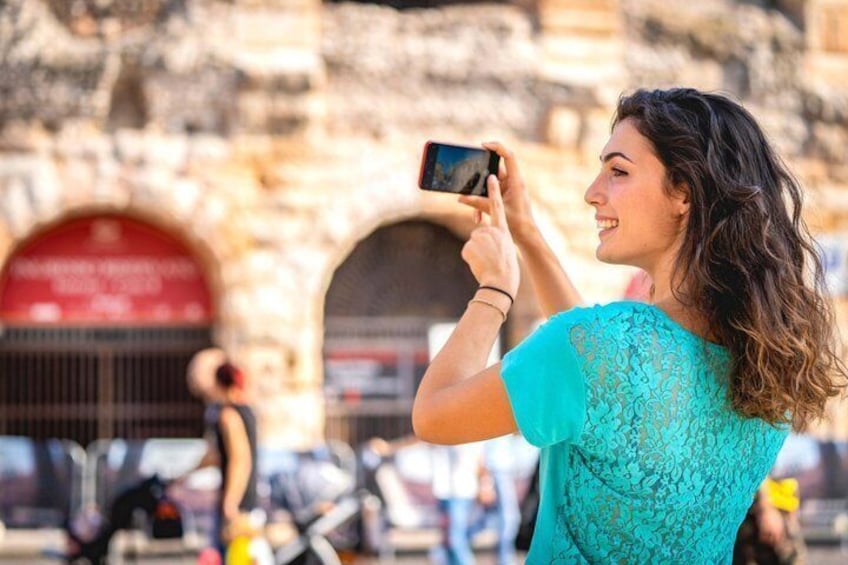
Verona Walking Tour with Audioguide on Your Smartphone

By TouringBee
Free cancellation available
The previous price was NZ$14 and current price is NZ$11 per adult
Features
  • Free cancellation available
  • 4h
  • Mobile voucher
  • Instant confirmation
Overview

The TouringBee audio guide is your convenient mobile companion for a self-guided tour of Verona. Designed to help you explore the city in just 1.5 to 2 hours, the tour leads you from Verona Arena to San Pietro Castle, passing by the city’s top attractions.

Highlights include: Juliet’s House, Verona’s Duomo, Castelvecchio Old Palace, Scaliger Bridge, Scaliger Arches.

The tour features 32 points of interest, with stories crafted by professional journalists and historians, all infused with humour and a passion for travel.

Once downloaded, the app works offline, and the audio guide is always clear in your headphones. Enjoy fascinating stories and legends at your own pace, without the need to keep up with a group. Pause anytime to relax at a café or wander down a charming alley before continuing your exploration.

If you only have a few hours in Verona, make the most of them with the TouringBee audio guide — you won’t miss a thing.

Activity location
  • Piazza Bra
    • Piazza Bra,
    • 37121, Verona, Italy
Meeting/Redemption Point
  • Piazza Bra
    • Piazza Bra
    • 37121, Verona, Veneto, Italy

Check availability


English in English
  • Activity duration is 4 hours4h
    4h
  • Opening hours: Tue 7:00 am-8:00 pm
  • English
Language options: English
Price details
NZ$13.83
NZ$11.06 x 1 AdultNZ$11.06

Total
The previous price was NZ$13.83 and current price is NZ$11.06
20% off

What's included, what's not

  • What's includedWhat's included
    Offline map with a route for easy GPS navigation
  • What's includedWhat's included
    Audio Guide App for iPhone and Android
  • What's includedWhat's included
    31 audio recordings narrated by a professional historian
  • What's includedWhat's included
    Illustrations to help you identify landmarks
  • What's includedWhat's included
    1 year of access to the tour in your preferred language
  • What's excludedWhat's excluded
    Smartphone and headphones
  • What's excludedWhat's excluded
    In-person tour guide
  • What's excludedWhat's excluded
    Transport
  • What's excludedWhat's excluded
    Food and drinks

Know before you book

  • Public transport options are available nearby
  • Suitable for all physical fitness levels
  • The audio guide is available through a dedicated mobile app for iOS and Android
  • Entry tickets to museums are not included. Please purchase them separately in advance
  • The tour does not cover all of Verona’s sights
  • This is a self-guided tour. You will need to download the audio guide app, activate your purchase, and follow the route on the app’s map. No human guide is provided
  • The audio guide is available at any time; the date and time selected at checkout are approximate

Activity itinerary

Piazza Bra
  • 10m
Piazza Bra is Verona’s grandest stage — an expansive square where daily life unfolds in the shadow of the mighty Arena, the Roman amphitheatre that still hosts opera under the stars. Framed by elegant 19th-century palazzi and shaded by rows of plane trees, it’s a place for lingering: espresso in hand, sunlight warming the stone, carriages rolling past. By day it hums with conversation; by night it glows rose-gold. From here, Verona opens like a storybook — slow, romantic, and effortlessly theatrical.
Arena di Verona (Pass by)
The Verona Arena is a Roman amphitheatre built in 30 AD, older than the Colosseum and astonishingly well preserved. Its pink and white limestone arches dominate Piazza Bra, while inside, tiers of stone seats still rise in perfect ellipse. Once the stage for gladiators, today it hosts world-class opera beneath the open sky — where Verdi replaces battle cries and candlelight replaces torches. With room for around 15,000 spectators, the Arena proves that some architecture doesn’t age — it simply changes its script.
Statua a Vittorio Emanuele II
  • 10m
The Statue of Vittorio Emanuele II stands proudly in Piazza Bra, just beside the Arena, honouring the first king of unified Italy. Unveiled in 1883, the bronze figure shows the monarch in military pose, symbolising the Risorgimento and the birth of the modern Italian state. Mounted high on a stone pedestal, he surveys the square with steady resolve. Amid Roman arches and café chatter, the statue adds a note of 19th-century patriotism — Italy looking forward while history surrounds it.
I Portoni della Bra
  • 10m
I Portoni della Bra are the grand medieval gateway linking Piazza Bra with Verona’s historic centre. Built in the 14th century under the Scaligeri, these stone arches once controlled access to the city, lowering heavy wooden doors at night. Today, no guards remain—only a steady flow of locals and visitors passing beneath their weathered vaults. Cross through, and the mood shifts: from open piazza to intimate streets. It’s a threshold in every sense — Verona narrowing, deepening, drawing you in.
Museo di Castelvecchio (Pass by)
The Museo di Castelvecchio is Verona’s most compelling blend of fortress and finesse. Housed in a 14th-century Scaliger castle, it was transformed in the 20th century by architect Carlo Scarpa, who layered medieval stone with razor-sharp modern design. Inside, you’ll find Veronese paintings, Gothic sculptures, armour, and the famous equestrian statue of Cangrande I — smiling in marble. Walk the ramparts for views of the Adige River, then return to the galleries where history feels curated, not caged. It’s a masterclass in how old and new can speak fluently.
Ponte Di Castelvecchio
  • 10m
The Ponte di Castelvecchio is a bold, brick-red medieval bridge stretching across the Adige River, built in the 14th century as a private escape route for the Scaliger rulers. Its three mighty arches and fortress-like towers feel more defensive than decorative—this was architecture with a plan B. Blown up in WWII and painstakingly rebuilt stone by stone, it stands today as both crossing and statement. Walk across at sunset, and the river glows beneath your feet like history still in motion.
Arco dei Gavi
  • 10m
The Gavi Arch (Arco dei Gavi) is a refined Roman triumphal arch dating back to the 1st century AD, once marking the entrance to ancient Verona. Unlike grand imperial arches, this one honoured a local noble family — the Gavi — proof that prestige wasn’t reserved for emperors alone. Dismantled by Napoleon’s troops and later reconstructed in the 1930s near Castelvecchio, it stands today in pale limestone elegance. Modest in size, precise in detail, it’s a quiet reminder that Roman Verona still shapes the city’s bones.
Palazzo Muselli
  • 10m
Palazzo Muselli, also known as Palazzo della Gran Guardia Nuova, is an elegant Renaissance palace along Corso Cavour. Built in the 16th century for the noble Muselli family, its harmonious façade of stone and arched windows reflects Verona’s refined civic style. Later used for military and administrative purposes, the building has witnessed centuries of quiet transformation. Though less theatrical than nearby monuments, it rewards a slower gaze — proof that in Verona, even restraint carries pedigree.
Palazzo Bevilacqua
  • 10m
Palazzo Bevilacqua is one of Verona’s most striking Renaissance façades, built in the 16th century and traditionally attributed to Michele Sanmicheli. Its exterior is theatrical in stone — stacked columns, sculpted busts, dramatic cornices — almost too grand for the narrow street it commands. Once home to the powerful Bevilacqua family, it later hosted emperors and nobles passing through the city. Today, it houses offices, but the façade still performs. Look up, and Verona suddenly feels unapologetically aristocratic.
Palazzo Carlotti
  • 10m
Palazzo Carlotti is a refined 18th-century palace along Corso Cavour, offering a quieter note in Verona’s architectural symphony. Built for the noble Carlotti family, its façade balances elegance with restraint — arched windows, soft stucco tones, and classical symmetry. Unlike the theatrical Renaissance palaces nearby, this one feels composed, almost introspective. Today it houses institutions and offices, but pause a moment and you can still sense the measured rhythm of aristocratic life once unfolding behind those dignified walls.
Porta Borsari - World Heritage Site
  • 10m
Porta Borsari is Verona’s most elegant Roman gateway, dating back to the 1st century AD. Once the main entrance to the ancient city, it originally had two façades — one facing in, one facing out — symbolising both welcome and defence. Today, its white limestone arches and layered Corinthian columns still rise with remarkable clarity along Corso Porta Borsari. Cars pass, shoppers stroll, but the gate remains immovable — a fragment of imperial Verona holding its ground in the modern flow.
Via Mazzini
  • 10m
Via Giuseppe Mazzini is Verona’s polished promenade—a sleek pedestrian artery linking Piazza Bra with Piazza delle Erbe. Once part of the Roman grid, today it’s lined with fashion boutiques, elegant façades, and the steady rhythm of footsteps on pale stone. Named after the 19th-century Italian patriot, the street blends commerce with quiet nationalism. Look beyond the shop windows and you’ll spot medieval walls and carved portals — reminders that even Verona’s shopping stroll comes layered with centuries.
Convent of Saint Mary 'della Scala' of the Servants of Mary
  • 10m
The Convent of Santa Maria della Scala stands beside Verona’s cathedral complex, a quiet remnant of medieval devotion. Founded in the 13th century, it belonged to Augustinian canons and later evolved through centuries of religious and civic use. Its cloisters and simple lines contrast with the ornate cathedral nearby, offering a more introspective atmosphere. Though less visited than Verona’s headline monuments, the convent carries a contemplative weight — stone corridors where faith, scholarship, and silence once walked side by side.
Porta dei Leoni
  • 10m
The Gate of the Lions (Porta Leoni) is one of Verona’s surviving Roman city gates, built in the 1st century AD along the ancient Via Postumia. Today, only part of the outer façade stands above ground — white stone arches framed by elegant columns — while the foundations and inner structure lie visible below street level. Named after a nearby sarcophagus relief of lions, the gate once marked a bustling entrance to Roman Verona. Now it rises quietly among modern buildings — a fragment of empire still holding its line.
Casa di Giulietta (Pass by)
Juliet’s House (Casa di Giulietta) is Verona’s most romantic address — whether history agrees or not. Tucked into a courtyard off Via Cappello, the 13th-century house features the famous balcony added in the 20th century, inspired by Shakespeare’s play. Below, visitors pose beside the bronze statue of Juliet, polished bright by hopeful hands. Letters of love still arrive here from around the world. Fact blends with fiction — but step inside the courtyard, and it’s easy to surrender to the storey.
Trattoria al Pompiere
  • 10m
Trattoria Al Pompiere is a Veronese institution tucked near Piazza delle Erbe, serving hearty regional cuisine since the 1930s. Once run by a local firefighter — hence the name — it has grown into one of the city’s most beloved traditional restaurants. Inside, brick arches and shelves of aged cheeses set the tone. On the menu: pastissada de caval (horse stew), house-made pasta, and a formidable selection of Italian cured meats. It’s not theatrical — just deeply authentic, where flavours speak louder than décor.
Piazza delle Erbe
  • 10m
Piazza delle Erbe is Verona at full colour — once the Roman forum, now a lively mosaic of market stalls, frescoed façades, and café umbrellas. Towering above are the Lamberti Tower and the ornate Madonna Verona Fountain, watching centuries unfold. Here, merchants once traded spices and silk; today, vendors sell fruit, souvenirs, and stories. By dusk, the square hums with aperitivo glasses clinking beneath painted walls. It’s layered, loud, and unmistakably alive — the city’s ancient heart still beating in public.
Torre dei Lamberti (Pass by)
Lamberti Tower (Torre dei Lamberti) rises above Piazza delle Erbe as Verona’s tallest medieval sentinel, begun in 1172 by the Lamberti family. Brick below, marble above, it reflects centuries of additions and ambition. Climb the 368 steps — or take the lift partway — for sweeping views of terracotta rooftops, the Adige River, and distant hills. Its two bells once marked fire and council; today they mark time. From the top, Verona arranges itself like a Renaissance painting — measured, luminous, unforgettable.
Pozzo dell' Amore
  • 10m
The Well of Love (Pozzo dell’Amore) hides in a small courtyard off Via Cappello, just steps from Juliet’s House. According to local legend, a young soldier fell in love with a noblewoman who would only marry a man brave enough to descend into this deep well and retrieve a lost object. He did — and won her heart. Whether true or not, the stone well still draws romantics who toss coins and make wishes. In Verona, even water remembers a love storey.
Colonna di San Marco
  • 10m
St. Mark’s Column (Colonna di San Marco) rises in Piazza delle Erbe, crowned by the winged lion of Venice — symbol of the Republic that ruled Verona from the 15th to 18th century. Erected in 1523, the column was both political statement and civic ornament, marking a shift from Scaliger to Venetian power. Today, the lion surveys market stalls and café tables with calm authority. It’s a reminder that Verona’s storey isn’t only Roman or romantic — it’s also proudly Venetian.
Case Mazzanti
  • 10m
The Mazzanti Houses (Case Mazzanti) line one side of Piazza delle Erbe, their façades covered in fading Renaissance frescoes that once blazed with mythological scenes and allegories. Originally medieval buildings, they were transformed in the 16th century when Venetian influence brought colour and theatrical flair to Verona. Look closely and you’ll spot gods, virtues, and fragments of storytelling clinging to the plaster. Time has softened the paint, but not the drama — these walls still perform, quietly, above the market’s daily hum.
Piazza dei Signori
  • 10m
Piazza dei Signori is the historic heart of Verona, where power, politics, and everyday life once met. Surrounded by elegant palaces and medieval towers, the square feels like a step back in time. Look for the statue of Dante, who found refuge here during his exile. Take a moment to admire the arches, frescoes, and quiet atmosphere that reveal Verona beyond its famous love storey.
Statua di Dante Alighieri
  • 10m
The Statua di Dante Alighieri stands proudly in Piazza dei Signori, honouring the great Italian poet who spent part of his exile in Verona. Created in the 19th century, the statue shows Dante deep in thought, gazing over the square. Locals still call this place “Piazza Dante.” It reminds visitors that Verona was not only the city of Romeo and Juliet, but also a refuge for one of Italy’s greatest literary minds.
Arche Scaligere
  • 10m
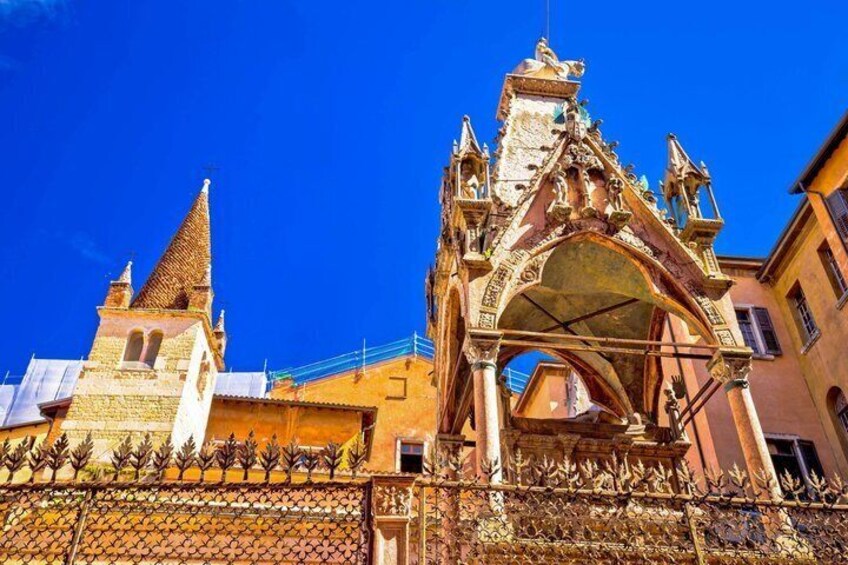
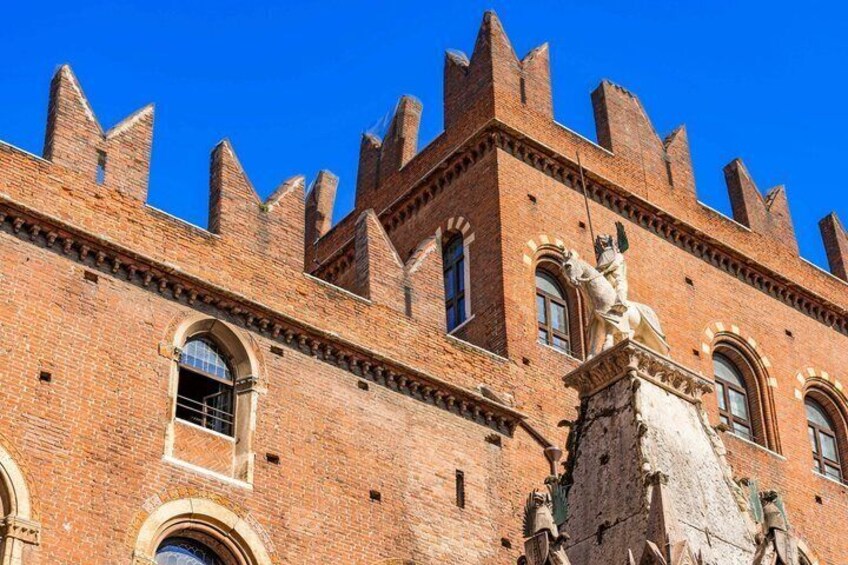
The Arche Scaligere are one of the finest examples of Gothic funerary art in Italy. These richly decorated tombs belong to the powerful Scaliger family, who ruled Verona in the Middle Ages. Look closely at the intricate carvings, statues of knights, and soaring spires. The most impressive is the tomb of Cangrande I, a celebrated leader and patron of Dante, whose legacy still shapes the city’s history.
Basilica di Sant' Anastasia (Pass by)
The Basilica di Sant'Anastasia is the largest church in Verona and a masterpiece of Italian Gothic architecture. Step inside to admire its soaring columns, colourful frescoes, and the famous “hunchback” holy water fonts. Don’t miss Pisanello’s stunning fresco of Saint George and the Princess. Built by the Dominicans, this peaceful basilica reveals Verona’s spiritual and artistic heritage beyond its romantic legends.
La Pigna di Via Pigna
  • 10m
The La Pigna di Via Pigna is a curious and lesser-known symbol of the city. This large stone pinecone, set high on a corner of a medieval building, dates back centuries and is linked to local legends. Some say it once marked the site of an ancient Roman fountain, while others believe it was a sign of prosperity. Today, it adds a touch of mystery and invites visitors to discover Verona’s hidden details beyond the main sights.
Complesso del Duomo di Verona (Pass by)
The Verona Cathedral, also known as the Duomo, is a fascinating blend of Romanesque and Gothic styles. Its elegant façade hides a richly decorated interior, where you can admire Titian’s famous painting of the Assumption. Built on the site of early Christian churches, the cathedral reflects centuries of faith and art. Take time to explore the nearby cloister and baptistery, which complete this important religious complex.
Ponte Pietra
  • 10m
The Ponte Pietra is the oldest bridge in the city, dating back to Roman times. Built from warm local stone, it connects the historic centre with the ancient theatre and the hills beyond. Although destroyed during World War II, it was carefully rebuilt using original materials. Walk across at sunset to enjoy beautiful views of the Adige River and Verona’s skyline, just as travellers have done for centuries.
Q.B. Gelato
  • 10m
Q. B. Gelato is a small, artisanal gelateria loved by locals for its high-quality ingredients and creative flavours. Everything is made fresh, often using seasonal fruits and natural products. Try classics like pistachio or stracciatella, or discover unique combinations you won’t find elsewhere. Located near Ponte Pietra, it’s the perfect stop for a sweet break while exploring Verona’s quieter, authentic streets.
Museo Archeologico al Teatro Romano (Pass by)
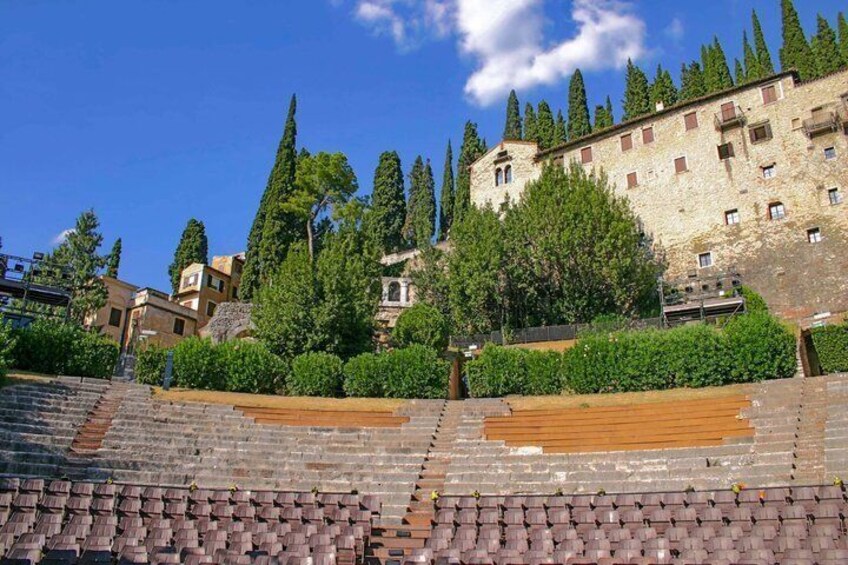
The Museo Archeologico al Teatro Romano sits next to Verona’s ancient Roman theatre and offers a fascinating glimpse into the city’s classical past. Inside, you’ll find statues, mosaics, inscriptions, and everyday objects recovered from the Roman era. The museum beautifully complements a visit to the theatre itself, letting you imagine life in Verona two thousand years ago and see how art and culture shaped the city long before its medieval fame.
Castel San Pietro
  • 10m
The Castel San Pietro crowns the San Pietro hill, offering sweeping views over Verona and the Adige River. Originally a medieval fortress, it has been rebuilt over centuries and now serves as a scenic lookout. From the terrace, you can see the city’s rooftops, Ponte Pietra, and the surrounding hills — a perfect spot for photos and sunsets.

Location

Activity location
  • LOB_ACTIVITIESLOB_ACTIVITIES
    Piazza Bra
    • Piazza Bra,
    • 37121, Verona, Italy
Meeting/Redemption Point
  • PEOPLEPEOPLE
    Piazza Bra
    • Piazza Bra
    • 37121, Verona, Veneto, Italy

Best Deals on Things to Do

Experience the wonders of the world up close with great deals on things to do near and far. Expedia offers one-of-a-kind activities that allow you to explore Verona your way. Whether you love nature, culture, food or a bit of adventure, we have the perfect activity for you.

Top experiences in Verona

With so many activities in Verona, planning the perfect day out may seem like a daunting task. Expedia is here to take the hassle out of finding the best attractions, tours and activities in Verona. Families, couples and business travellers can all find the perfect activity in Verona to create life-long memories with the help of Expedia.