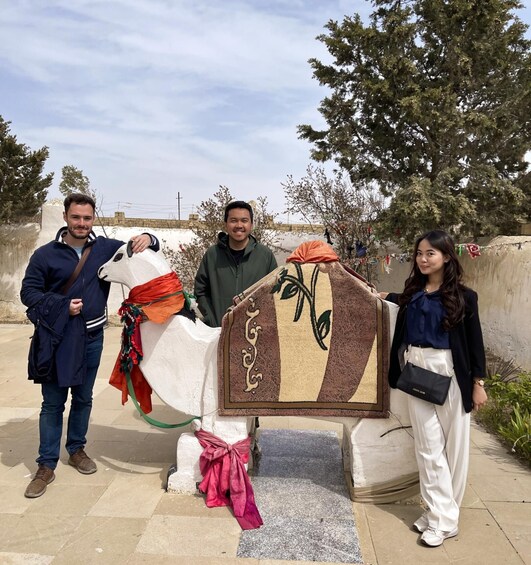
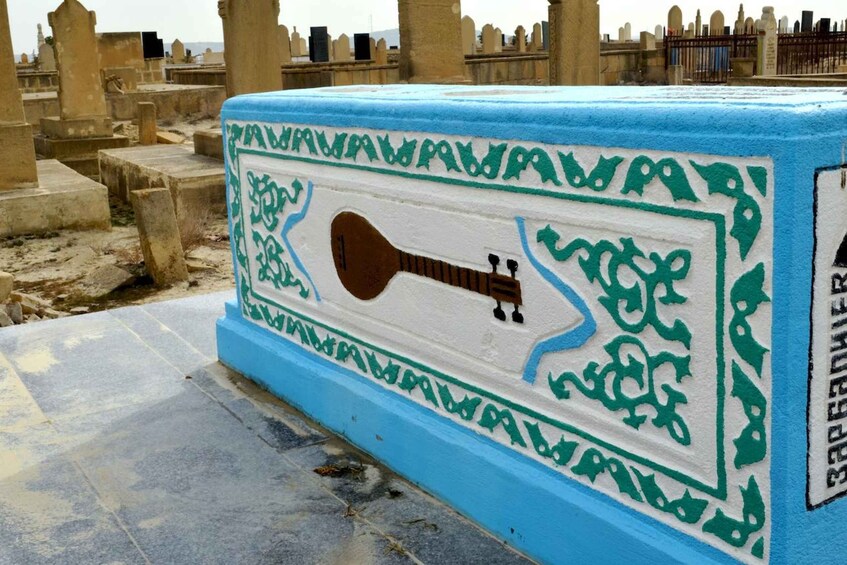
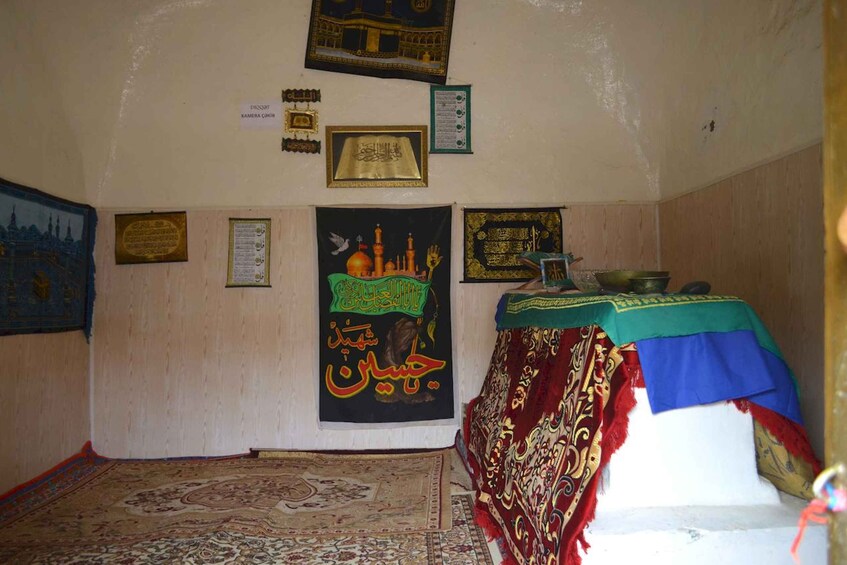
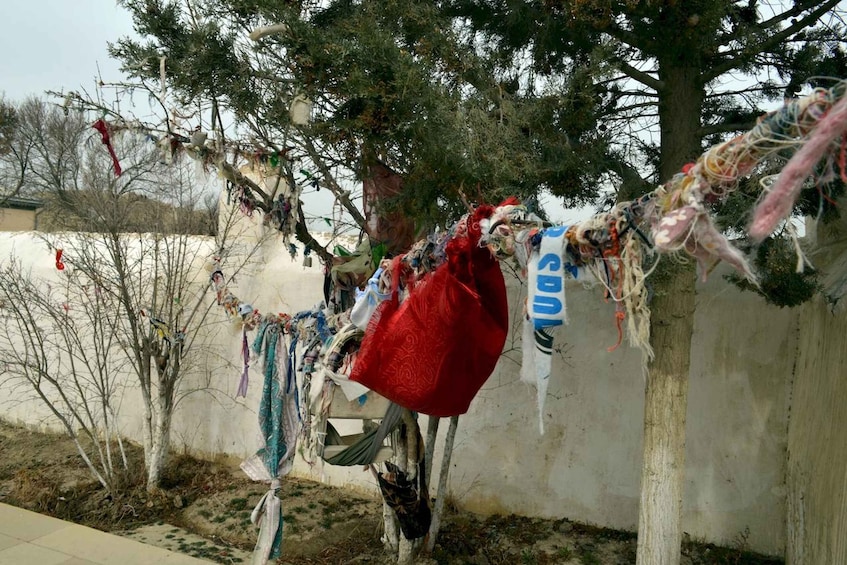
Guns, snakes, samovar, tea glasses, fruits, cows, deer – what do these have in common? And Sergei Parajanov? Sofi Hamid Shrine and Cemetery is a place riddling visitors with its unusual symbols and rich saturated colours. If you ask locals, very few will know about its existence. Sofi Hamid was a camel herd, but his main reputation among the locals came from his Sufi (mystical branch of Islam) teachings. At his deathbed, he asked his followers to bury him wherever his camel would rest. His will was granted and this spot became his tomb and shrine. Since then the area became surrounded with his followers and population who wanted to be buried close to a sacred shrine.
Sofi Hamid tells about the history of Azerbaijan, its culture and shared beliefs of locals much more than any other historical monument of the country. Sufism (tasawwuf), paganism and communism entwined into one in this area, about 50km away from Baku city centre. As Rumi said: “Between belief and non-belief there is a thin line. I'll meet you there.”
No wonder that Parajanov chose this spot for Ashik Kerib, Parajanov's last and his own favourite film, for colourful pictures of camels, fruits and flowers and other scenes.
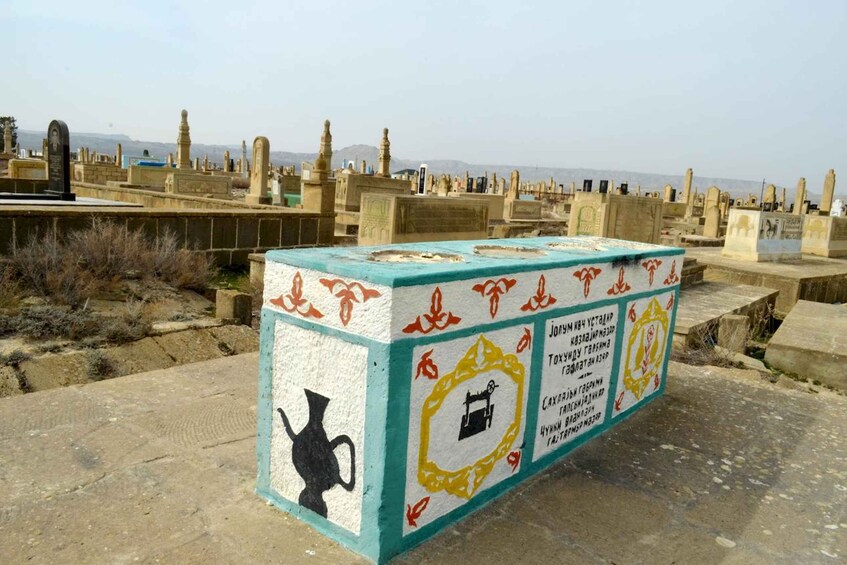
We truly believe that Sofi Hamid, located around Gobustan National Park, will become one of the must-see spots in Azerbaijan and will be in the lists of the most unusual cemeteries in the world very soon, competing with Merry Cemetery in Romania or Cimetière du Père Lachaise in Paris. Even more, the poetry composed by locals dedicated to their deceased relatives are another mirror of Azerbaijani society and how they look in the face of death with a stoic mindset. One of the poems on a colourful grave with images of a sewing machine and ablution jar reads:
“I’m on the transitory path
Out of a sudden, I was afflicted
Keep my grave, let it be a souvenir
Tombs won’t return the dead”