


Earn OneKeyCash when you sign in and book an activity
Saint-Pierre: Walking Tour with Local Guide
Reviews
Features
- Free cancellation available
- 1h
- Mobile voucher
- Instant confirmation
- Multiple languages
Overview
- The island's architecture
- The island's history of fishing
- The island's role in British / French rivalries
Activity location
- Saint Pierre and Miquelon
- Saint-Pierre, Saint Pierre and Miquelon
Meeting/Redemption Point
- 4 Pl. Mgr Francois, Saint-Pierre 97500, St Pierre and Miquelon | Saint-Pierre's Cathedral - You can't miss the steeple, it's visible from everywhere! Your guide is Marc, he has a distinctive beard and is published historian.
- Saint-Pierre, Saint Pierre and Miquelon
Check availability
Saint-Pierre: Walking Tour with Local Guide
- 1h
- English
What's included, what's not
- Start: — History of the Church of Saint-Pierre from 1689 to today
- Stop 2 — Local Government, Justice and the French Government
- End: — Return to Town Centre
- The full tour is about an hour and half in length, depending on questions and reasonable requests.
- You will be walking approximately 4000 to 5000 steps [2.5 km / 1,5 mi]
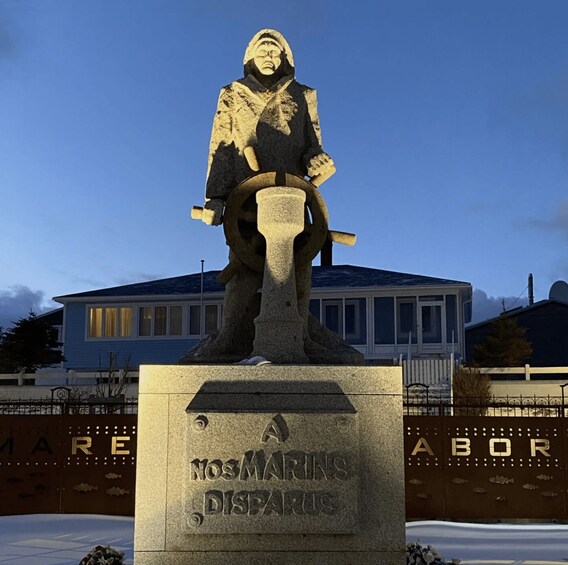
- Stop 3 — Square Joffre – Monument to lost mariners and surrounding buildings
- Stop 4 — Brief history of the Saint-Pierre Cannons, Lighthouse and Ile aux Marins
- Stop 5 — Place du Générla de Gaulle - World War II and Charles de Gaulle
- Stop 6 — Architecture of 19th century Saint-Pierre and the many fires that engulfed the town
- Stop 7 — War monument for World War I an World War II and Free French monument
- Stop 8 — Stories about the Saint-Pierre Cemetery
- Stop 9 — Prohibition-Era Warehouses sector
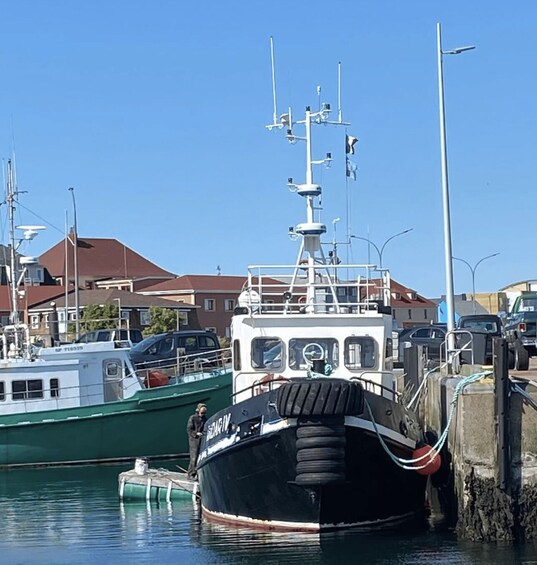
- Stop 10 — Saint-Pierre Harbour and back to the Tourism Office
Know before you book
- Not allowed: Audio recording, Pets (assistance dogs allowed), Smoking
- Not suitable for: People with mobility impairments, Wheelchair users
What you can expect
Welcome to Saint-Pierre and Miquelon — the last French territory in North America. For centuries, these islands’ fate was tied to the shifting fortunes of France and Britain, reflecting wars, revolutions, and empires on both sides of the Atlantic.
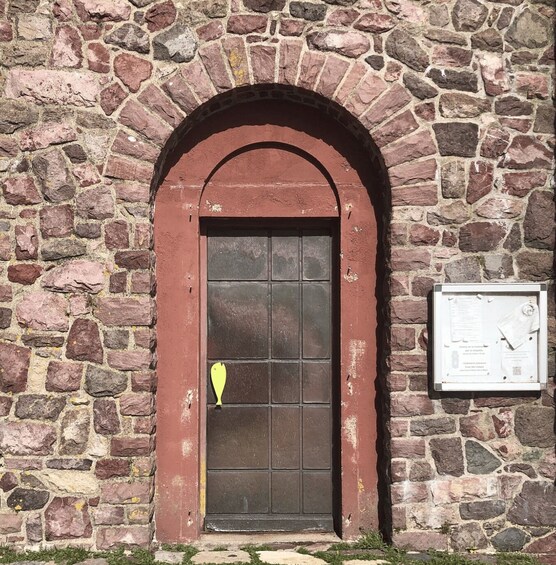
We'll start the tour in front of Saint-Pierre Church and we'll delve into many topics, from exploration, to colonisation, wars and prohibition.
Lying just south of Newfoundland, the islands appeared on some of the earliest maps of the New World. Around 1500, Portuguese and Spanish explorers charted them under various names. In 1536, Jacques Cartier made the first written mention of Saint-Pierre, already known to European fishermen who came for the rich cod banks. By the late 1600s, Saint-Pierre had become a seasonal base for fishermen from Saint-Malo and Granville, while Basques from Saint-Jean-de-Luz used Miquelon. Each summer, hundreds came to cure and dry cod along the shores, forming a bustling community that lived by the rhythm of the sea.
Life here was never easy. English raids, harsh winters, and disputes over fishing grounds were constant. The 1713 Treaty of Utrecht forced France to abandon Newfoundland, and Saint-Pierre briefly became a British outpost. Fifty years later, the 1763 Treaty of Paris returned the islands to France as a refuge for French fishermen, but during the American Revolution, British forces destroyed the settlements once again.
The 1783 Treaty of Versailles restored the islands to France, but the country soon spiraled into financial crisis and revolution. In 1793, war with Britain brought another invasion; the population was deported, and Saint-Pierre was left in ruins. The islands were not permanently restored to France until after Napoleon’s final defeat in 1815, with settlers returning the following year.
Throughout the 19th century, Saint-Pierre grew into a thriving port and one of France’s most important fishing bases. Trade expanded with France, Spain, and the United States. Yet tensions with Newfoundland often flared over fishing rights, leading to political and economic conflicts that would last a century.
By 1900, tariffs and poor fishing seasons weakened the local economy. Then, during American Prohibition from 1919 to 1933, Saint-Pierre suddenly boomed as rumrunners used the islands as a warehouse for liquor bound for the US The “Prohibition years” brought unprecedented prosperity—until the ban ended, and the economy collapsed once again.
In World War II, the islands briefly fell under Vichy France before being liberated by the Free French Navy in 1941 — a symbolic victory for General de Gaulle. After the war, the fishery was modernised, but disputes with Canada over fishing boundaries continued. In 1992, an international tribunal granted France a small economic zone and a narrow maritime corridor.
Location
Activity location
- Saint Pierre and Miquelon
- Saint-Pierre, Saint Pierre and Miquelon
Meeting/Redemption Point
- 4 Pl. Mgr Francois, Saint-Pierre 97500, St Pierre and Miquelon | Saint-Pierre's Cathedral - You can't miss the steeple, it's visible from everywhere! Your guide is Marc, he has a distinctive beard and is published historian.
- Saint-Pierre, Saint Pierre and Miquelon