
Earn OneKeyCash when you sign in and book an activity


Check availability
Mexico City Self-Guided Tour: Historic Centre & Beyond
- 9h 30m
Activity duration is 9 hours and 30 minutes 9h 30m - English
Language options: English
Price details
Paid at activityNZ$0.60
Total
includes taxes & fees
67% off
What's included, what's not
- Access to the audio guide for 60+ Mexico City attractions and hidden spots
What's included What's included - Self-guided walking tour, fully on the app — explore at your own pace
What's included What's included - Digital Map & Offline Content: no cell service needed
What's included What's included - Instant access: your tour activation code is ready on your ticket, below the barcode.
What's included What's included - NO live guide or rental equipment provided — please bring your own smartphone and headphones
What's included What's included - Private transport
What's excluded What's excluded - Public transport
What's excluded What's excluded - Our app-based self-guided tour has no physical guide on-site.
What's excluded What's excluded - Ticket fees for tourist and cultural attractions.
What's excluded What's excluded
Know before you book
- Not recommended for travellers with spinal injuries
- Not recommended for travellers with poor cardiovascular health
- Public transport options are available nearby
- Suitable for all physical fitness levels
Activity itinerary
Zócalo
- 30m
One of the world's largest public squares pulses at the heart of Mexico City where Aztec emperors held court, Spanish viceroys ruled New Spain, and modern Mexicans gather to celebrate and protest. The massive Mexican flag rising from the plaza's centre waves above the ruins of Tenochtitlan's sacred precinct, the Metropolitan Cathedral built from the stones of Aztec temples, and the National Palace housing Diego Rivera's epic murals. This UNESCO World Heritage site has witnessed over 700 years of history from human sacrifices to independence declarations, making it the symbolic and geographic centre of the nation.
Palacio de Bellas Artes (Pass by)
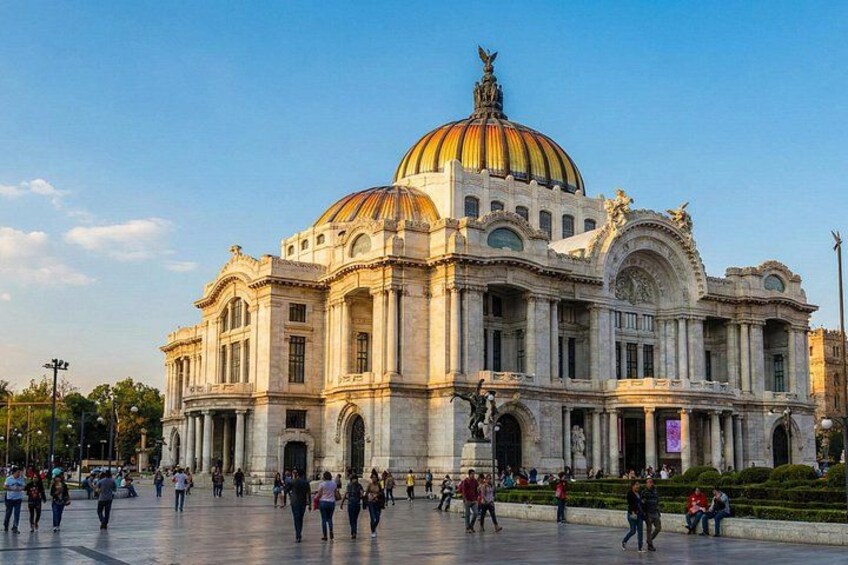
This magnificent cultural palace showcases the transition from Art Nouveau exterior to Art Deco interior, taking 30 years to complete due to the Mexican Revolution and the building's gradual sinking into the soft lakebed. The white Carrara marble facade gleams with sculptures and ornamental details while inside, dramatic murals by Diego Rivera, David Alfaro Siqueiros, and José Clemente Orozco adorn the walls. The famous Tiffany glass curtain depicting the Valley of Mexico weighs 24 tonnes and is displayed only during performances in the grand theatre where the Ballet Folklórico brings traditional Mexican dance to life.
Museo del Templo Mayor (Pass by)
The sacred heart of the Aztec empire was accidentally rediscovered in 1978 when electrical workers stumbled upon a massive stone disk depicting the dismembered moon goddess Coyolxauhqui. Excavations revealed seven successive temples built one atop another as each Aztec ruler expanded the sacred precinct where priests performed human sacrifices to feed the sun god Huitzilopochtli. The adjacent museum displays over 7,000 artefacts including sacrificial knives, skull racks, and offerings from across the Aztec empire that illuminate the sophisticated and terrifying civilisation the Spanish encountered in 1519.
Museo Nacional de Antropologia (Pass by)
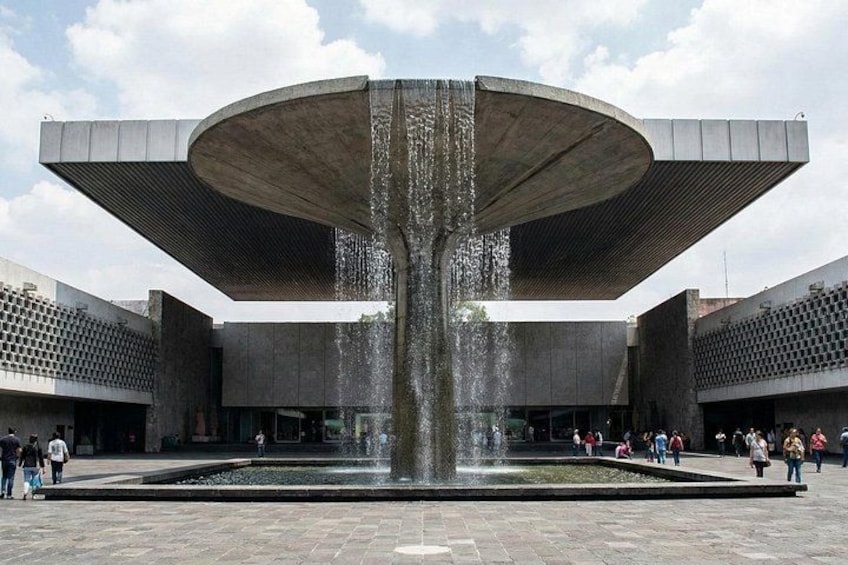
The world's greatest museum of ancient Mesoamerican civilisations houses the legendary Aztec Sun Stone, massive Olmec heads, and treasures from Maya, Zapotec, and dozens of other pre-Columbian cultures across 23 exhibition halls. The stunning modernist building designed by Pedro Ramírez Vázquez features a massive cantilevered roof supported by a single column around which water cascades like rain, representing the life-giving forces worshipped by ancient Mexicans. Plan at least half a day to explore highlights including the recreation of Moctezuma's feathered headdress and the faithful reproduction of King Pakal's jade-filled tomb from Palenque.
Coyoacan
- 1h
This bohemian area has attracted artists and intellectuals for centuries, from conquistador Hernán Cortés who built his headquarters here to painters Frida Kahlo and Diego Rivera who made it their home in the 20th century. Cobblestone streets lined with colourful colonial mansions lead to the central plaza where students, families, and street performers gather beneath ancient trees surrounding a fountain and historic church. The neighborhood's many cafes, bookshops, and artisan markets preserve a village atmosphere just 30 minutes from the frenetic Zócalo, offering respite and cultural depth in equal measure.
Museo Frida Kahlo (Pass by)
The cobalt-blue Casa Azul where Frida Kahlo was born, lived, and died has become a pilgrimage site for admirers of Mexico's most famous artist and feminist icon. Personal belongings, unfinished paintings, and the bedroom where Frida spent months recovering from her devastating bus accident reveal intimate details of her extraordinary life and turbulent marriage to muralist Diego Rivera. The lush courtyard gardens, pre-Columbian artefacts collected by both artists, and Frida's traditional Tehuana dresses and jewellery create an immersive experience that explains her art through the spaces where she created it.
Xochimilco (Pass by)
The last remnants of the ancient lake system that once surrounded the Aztec capital survive in these UNESCO-listed floating gardens where colourful trajinera boats navigate canals that have been farmed for over 1,000 years. Flower-bedecked gondola-style boats carry families celebrating birthdays and tourists experiencing authentic Mexican fiesta culture while mariachis and marimba players float alongside selling songs and snacks. The chinampas, artificial islands created by the Aztecs using mud and vegetation, still produce flowers and vegetables using traditional methods, preserving agricultural techniques that fed the empire's capital of 200,000 residents.
San Juan Teotihuacan (Pass by)
The mysterious city of the gods dominated Mesoamerica from 100 BCE until its sudden collapse around 750 CE, leaving behind pyramids that rival Egypt's in grandeur and influenced every subsequent Mexican civilisation. The Pyramid of the Sun, third-largest pyramid on Earth, rises 65 metres above the Avenue of the Dead while the smaller but perfectly proportioned Pyramid of the Moon frames the ceremonial avenue's northern terminus. Who built this city that housed 125,000 residents remains unknown—even the Aztecs, who made pilgrimages here centuries later, believed gods rather than humans could have created such monumental architecture.
National Palace
- 1h
Built atop the ruins of Moctezuma's palace using stones from Aztec temples, this vast complex has housed the offices of every Mexican president since independence and preserves Diego Rivera's greatest masterwork on its grand staircase walls. Rivera's epic murals spanning Mexican history from ancient creation myths through the 1910 Revolution took over 20 years to complete, covering 450 square metres with thousands of figures representing the triumph of the mestizo people over colonialism. The palace also displays the original bell rung by Father Hidalgo to launch the independence movement in 1810, still ceremonially rung each September by the president.
Roma
- 1h
These adjacent areas represent Mexico City's coolest quarters, where Porfiriato-era mansions and Art Deco apartment buildings house trendy restaurants, coffee shops, and boutiques along tree-lined boulevards circling peaceful parks. Roma Norte's Plaza Río de Janeiro features a replica of Michelangelo's David surrounded by Italian-style architecture while Condesa's Parque México offers jazz concerts and dog-walking beneath century-old trees. The 2017 earthquake damaged many buildings but sparked a renaissance of restoration and renewal, with innovative chefs and designers leading a cultural revival that has made these areas the heart of contemporary Mexican creativity.
Our Lady Of Guadalupe Basilica
- 30m
The world's most visited Catholic pilgrimage site attracts 20 million faithful annually who come to venerate the miraculous tilma upon which the Virgin Mary appeared to peasant Juan Diego in 1531. The original 16th-century basilica, dramatically tilted by the sinking lakebed, stands beside a massive modern circular church where moving walkways carry pilgrims past the inexplicably preserved cloak that defies scientific explanation. The shrine complex on Tepeyac Hill encompasses multiple churches, a museum of religious art, and gardens where pilgrims often complete the final approach on their knees in devotion.
Alameda
- 30m
Mexico's oldest public park was established in 1592 on the site where the Spanish Inquisition once burned heretics at the stake, now transformed into a peaceful refuge of fountains, sculptures, and shaded walkways in the heart of the historic centre. The Hemiciclo a Juárez monument honours the beloved president who separated church and state while lovers share paddle boats on the lake and families enjoy weekend concerts at the art nouveau kiosk. The park provides the perfect setting for the adjacent Palacio de Bellas Artes while Diego Rivera's Dream of a Sunday Afternoon in Alameda Park resides in the nearby museum built specifically to house this rescued earthquake-damaged masterpiece.
La Merced Market
- 30m
The largest traditional market in the Americas sprawls across multiple buildings where over 3,000 vendors sell everything from exotic fruits and hand-pressed tortillas to medicinal herbs and piñatas in a sensory explosion of authentic Mexican commerce. Mountains of chiles in every variety, butchers wielding cleavers over fresh cuts, and grandmothers ladling steaming pozole create an unfiltered glimpse into how millions of Mexicans shop daily, far from sanitised supermarkets. The market traces its origins to Aztec times when the site served as a tianguis, and the chaotic energy preserves trading traditions that have survived conquest, revolution, and modernization unchanged for centuries.
Mexico City Metropolitan Cathedral
- 30m
The largest and oldest cathedral in the Americas took 250 years to build, resulting in a magnificent fusion of Renaissance, Baroque, and Neoclassical styles constructed using stones from the destroyed Aztec Great Temple that once occupied this sacred ground. The cathedral's twin bell towers frame 14 side chapels, ornate altarpieces dripping with gold leaf, and the spectacular Altar of the Kings covered floor to ceiling with gilded carvings of saints and biblical figures. The building's dramatic tilt, caused by the sinking lakebed beneath, required an innovative engineering rescue mission that continues today, while the Sagrario parish church attached to its side adds another layer of colonial splendour to this monument of spiritual conquest.
Location
Activity location
- Zócalo
LOB_ACTIVITIES LOB_ACTIVITIES - Ciudad de México, Ciudad de México, Mexico
Meeting/Redemption Point
- Plaza de la Constitución
PEOPLE PEOPLE - Plaza de la Constitución
- 06000, Ciudad de México, Ciudad de México, Mexico
Best Deals on Things to Do
Experience the wonders of the world up close with great deals on things to do near and far. Expedia offers one-of-a-kind activities that allow you to explore Ciudad de México your way. Whether you love nature, culture, food or a bit of adventure, we have the perfect activity for you.
Top experiences in Ciudad de México
With so many activities in Ciudad de México, planning the perfect day out may seem like a daunting task. Expedia is here to take the hassle out of finding the best attractions, tours and activities in Ciudad de México. Families, couples and business travellers can all find the perfect activity in Ciudad de México to create life-long memories with the help of Expedia.