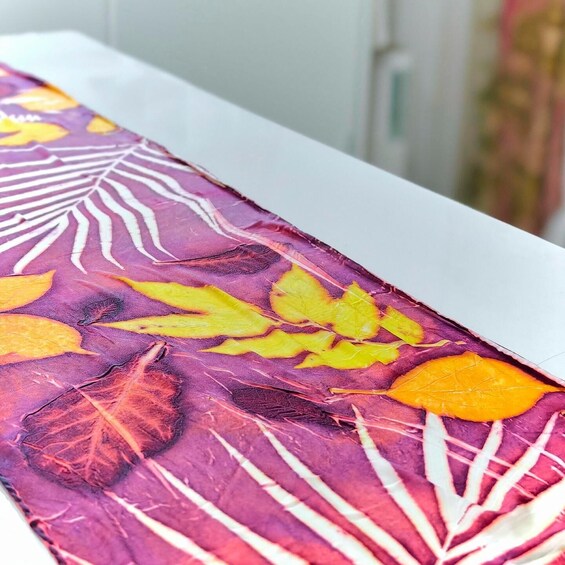
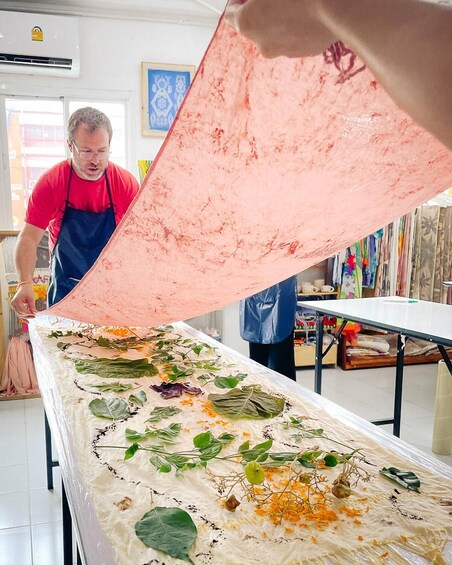
Press real leaves and flowers onto a cotton scarf, roll it tight, steam it, and unwrap to see botanical shapes printed by natural pigments alone. That's eco-printing — nature's way of textile design.
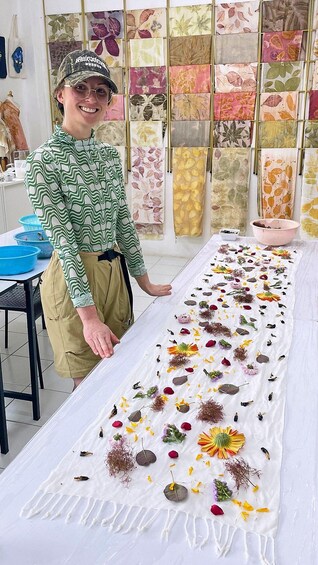
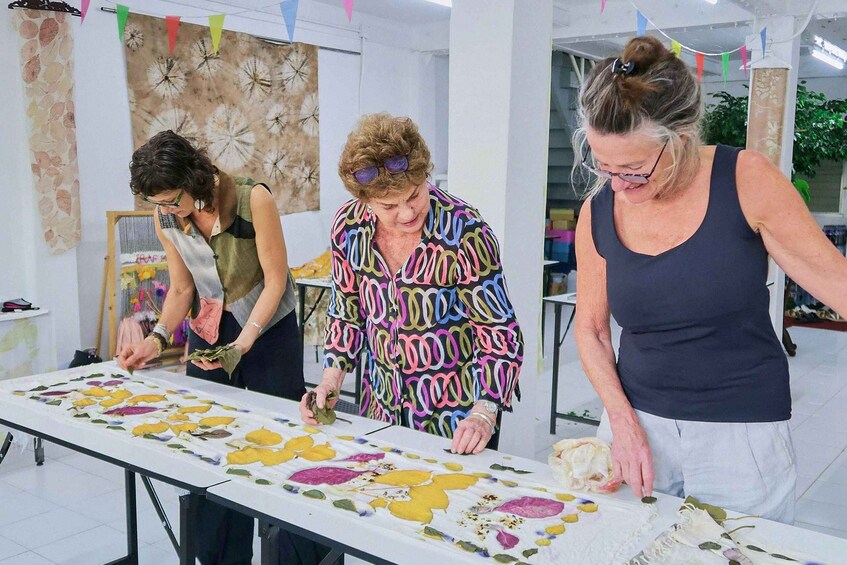
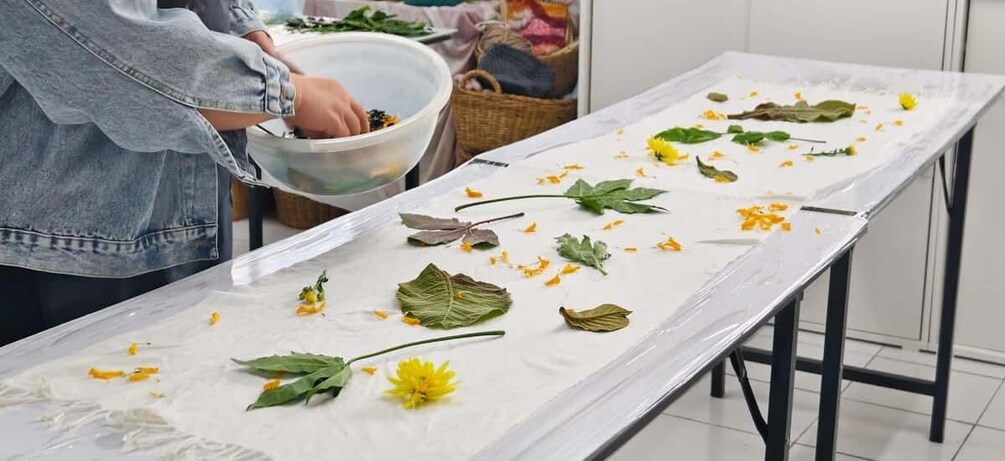
At GIGIPAYNE Studio in Bangkok, you learn the full process from scratch. Your instructor helps you select leaves and flowers — which ones hold colour, which leave sharp detail, and why it matters. Arrange your botanicals on the fabric, layer and fold, then bundle everything tight for steaming. While the bundle steams, you learn how mordants and modifiers shift colour — how iron darkens, how copper greens, how the same leaf gives different results on different cloth. This is where the science meets the craft.
Then comes the best part. Unwrap your bundle and see what the plants left behind. The shapes, tones, and details depend on your arrangement, your chosen leaves, and how the steam moved through the fabric. Every piece comes out different.
You work with botanical materials sourced locally, a hand-woven cotton scarf from Thai artisan communities, and natural mordants. No experience needed — your instructor guides you from choosing your first leaf to reaching your final prints.
You leave with an eco-printed cotton scarf (180×50 cm), a cotton cloth piece, and a tote bag — all featuring your own botanical arrangements — plus a PDF guide so you can try eco-printing at home with a regular kitchen setup.