Ready for the adventure of a lifetime? Let Expedia.co.nz help you find the most exciting and fun things to do in Surakarta, Central Java while also allowing you to save a ton on travel arrangements. Regardless of whether you’re an urban explorer or an intrepid outdoor enthusiast, we can help you decide exactly what to do and see during your time in town.
Our thorough travel guides offer you an insider’s perspective on all of the best Surakarta attractions from NZ$102, making it easy for you to decide which places to visit and when. And by using Expedia.co.nz to set your sightseeing schedule, you can take in more of the enchanting attractions this area is famous for.
From group Surakarta tours and must-see landmarks to personal guides who take you off-the-beaten track, Expedia.co.nz offers you over 6 of the most popular events, activities, and attractions in this corner of the world. So whether you’re travelling alone, alongside a loved one, or with the whole family in tow, be sure to browse through our extensive travel guides prior to your plane touching down in this spectacular Surakarta. We even have a massive selection of flights, car hires, and accommodation for you to choose from. So what are you waiting for? Start your search today, and you’ll be having the time of your life before you know it.


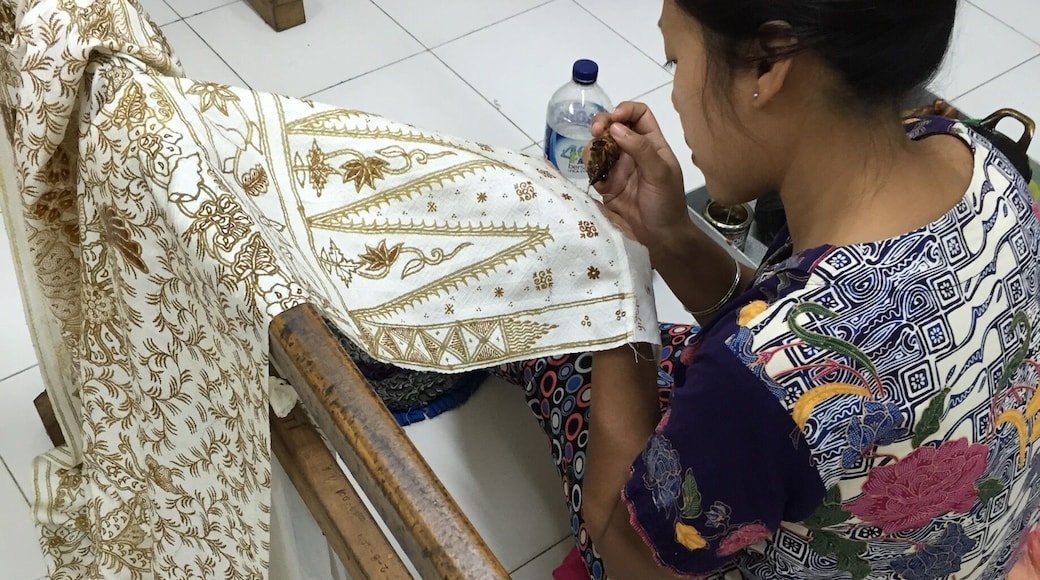
![At the museum no photos are allowed which is really unfortunate as it was well worth the visit and the guided tour is definitely not to be missed. In the museum there are even Batik made from the Dutch era which depicts stories like Little Red Riding Hood and Snow White!
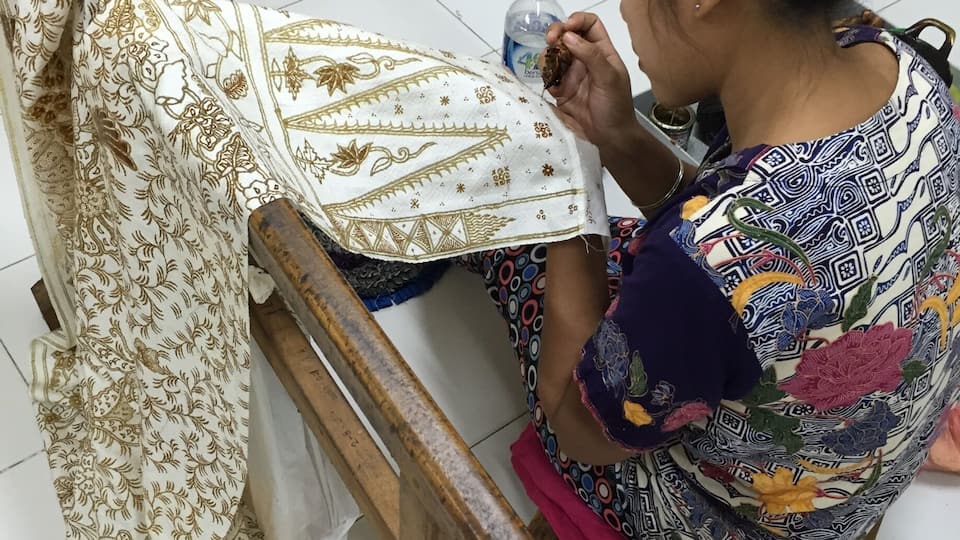
I enjoyed the tour v much and at the end of the tour we were brought to this room where the artisan were working on hand drawn batik.
Below is an excerpt from Wikipedia for anyone interested in learning more about the process of batik making.
Firstly, a cloth is washed, soaked and beaten with a large mallet. Patterns are drawn with pencil and later redrawn using hot wax, usually made from a mixture of paraffin or bees wax, sometimes mixed with plant resins, which functions as a dye-resist. The wax can be applied with a variety of tools. A pen-like instrument called a canting (IPA: [tʃantiŋ], sometimes spelled with old Dutch orthography tjanting) is the most common. A canting is made from a small copper reservoir with a spout on a wooden handle. The reservoir holds the resist which flows through the spout, creating dots and lines as it moves. For larger patterns, a stiff brush may be used. Alternatively, a copper block stamp called a cap (IPA: [tʃap]; old spelling tjap) is used to cover large areas more efficiently.
After the cloth is dry, the resist is removed by scraping or boiling the cloth. The areas treated with resist keep their original color; when the resist is removed the contrast between the dyed and undyed areas forms the pattern. This process is repeated as many times as the number of colors desired.
The most traditional type of batik, called batik tulis (written batik), is drawn using only the canting. The cloth need to be drawn on both sides and dipped in a dye bath three to four times. The whole process may take up to a year; it yields considerably finer patterns than stamped batik.
Source: Wikipedia](https://images.trvl-media.com/place/6224808/26fd1460-c65a-4c1a-9444-7a893e883ac9.jpg?impolicy=fcrop&w=1040&h=580&q=mediumHigh)
![At the museum no photos are allowed which is really unfortunate as it was well worth the visit and the guided tour is definitely not to be missed. In the museum there are even Batik made from the Dutch era which depicts stories like Little Red Riding Hood and Snow White!
I enjoyed the tour v much and at the end of the tour we were brought to this room where the artisan were working on hand drawn batik.
Below is an excerpt from Wikipedia for anyone interested in learning more about the process of batik making.
Firstly, a cloth is washed, soaked and beaten with a large mallet. Patterns are drawn with pencil and later redrawn using hot wax, usually made from a mixture of paraffin or bees wax, sometimes mixed with plant resins, which functions as a dye-resist. The wax can be applied with a variety of tools. A pen-like instrument called a canting (IPA: [tʃantiŋ], sometimes spelled with old Dutch orthography tjanting) is the most common. A canting is made from a small copper reservoir with a spout on a wooden handle. The reservoir holds the resist which flows through the spout, creating dots and lines as it moves. For larger patterns, a stiff brush may be used. Alternatively, a copper block stamp called a cap (IPA: [tʃap]; old spelling tjap) is used to cover large areas more efficiently.
After the cloth is dry, the resist is removed by scraping or boiling the cloth. The areas treated with resist keep their original color; when the resist is removed the contrast between the dyed and undyed areas forms the pattern. This process is repeated as many times as the number of colors desired.
The most traditional type of batik, called batik tulis](https://images.trvl-media.com/place/6224808/26fd1460-c65a-4c1a-9444-7a893e883ac9.jpg?impolicy=fcrop&w=350&h=192&q=medium)